India is famous for its forts, palaces, and dramatic landscapes — but its real magic lives in the moments that can’t be photographed. It’s the quiet pause, the unexpected aroma, the rhythm that makes your body respond before your mind, the textures that carry stories, and the stillness that feels like a gift.
In this edition, Sacred Dot explores India through sight, sound, scent, taste, touch, and soul — with each destination offering a sensorial universe of its own.
SIGHT — The India That Reveals Itself Slowly
Ladakh: Where Light Redraws the Landscape 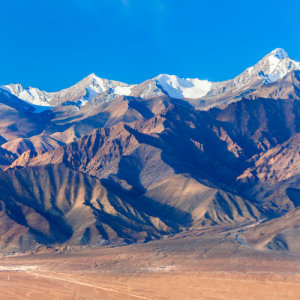
Ladakh’s beauty unfolds slowly in the high-altitude quiet of the Himalayas. At over 11,000 ft, the air is crisp, the colours sharper, and the horizons impossibly wide. At sunrise, the mountains brighten one ridge at a time, revealing glaciers, monasteries, and lunar-like valleys in astonishing clarity. The stillness is profound — the kind that makes you instinctively breathe deeper. Whether you’re overlooking Pangong Lake’s shifting shades of blue or watching prayer flags flutter against the sky, Ladakh invites you to witness a landscape that feels both ancient and untouched.
Varanasi: The World’s Oldest Living City, Seen at Dawn 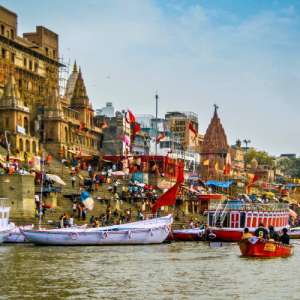
Varanasi is one of the world’s oldest continuously inhabited cities, and seeing it at sunrise is like watching centuries exhale. From a wooden boat on the Ganga, the city emerges through layers of mist — temple spires, riverside palaces, priests preparing offerings, and pilgrims stepping into the water to greet the day. The light changes gently, turning stone steps gold and revealing details that feel suspended in time. It’s not just a view; it’s a living ritual. Every moment reflects a blend of faith, continuity, and quiet beauty that cannot be staged or rehearsed.
Jaisalmer: Where the Desert Plays With Light 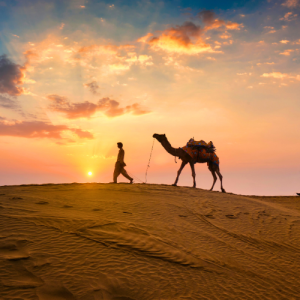
In the far west of Rajasthan, the Thar Desert offers one of India’s most striking visual experiences. Here, sight is all about scale — endless dunes sculpted by the wind, ridgelines that shift with every hour, and a horizon so vast it blurs your sense of distance. Sunrise casts long shadows across the sand, while sunset turns the entire landscape molten gold. Jaisalmer Fort, carved from local sandstone, glows at twilight as if lit from within. The city and desert together create an almost cinematic stillness — a place where light becomes part of the architecture.
Udaipur: A City Built on Water and Imagination 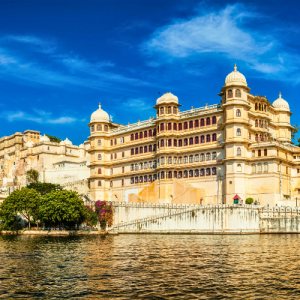
Udaipur’s beauty lies in its harmony: lakes reflecting palaces, palaces mirroring the sky, and the Aravalli hills framing it all like a painted backdrop. Founded by the Mewar dynasty — one of the world’s oldest surviving royal lineages — the city was designed to feel serene and majestic at once. As boats glide across Lake Pichola, the Lake Palace seems to float weightlessly on the water, and the City Palace rises in a gleaming cascade of balconies and courtyards. At sunset, everything turns soft and luminous, giving Udaipur an unreal, almost cinematic glow.
Hampi: Ruins of an Ancient Empire 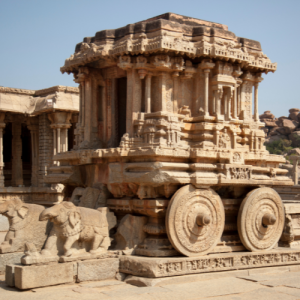
Hampi feels less like a destination and more like a myth you can walk through. Once the capital of the Vijayanagara Empire — a powerful South Indian dynasty that flourished in the 14th to 16th centuries — the city was renowned for its wealth, temples, and vibrant marketplaces. Today, its ruins rest dramatically among giant granite boulders and palm-filled valleys, creating a landscape that looks almost sculpted by imagination. As the sun rises, the stones shift from rose to gold, revealing carved pillars, monolithic statues, and ancient bazaars that once hosted traders from Persia, Portugal, and beyond. Standing atop Matanga Hill or wandering the courtyards of the Virupaksha Temple, sight becomes a form of time travel — a quiet encounter with a civilisation whose grandeur still echoes in the stones.
SOUND — Where Culture Travels Through the Air
Leh Monasteries: Chants Older Than Nations 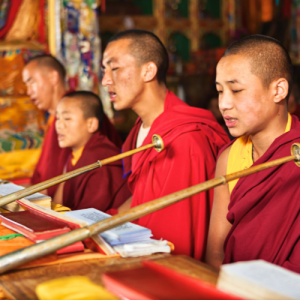
Buddhist monasteries such as Hemis and Thiksey begin their day long before the first hint of sunrise colours the sky. In the pre-dawn cold, the air feels thinner, sharper — almost expectant. Inside the assembly hall, rows of maroon-robed monks gather with quiet familiarity, opening their scripture books with soft, deliberate movements. Then the chanting begins.
The mantras start as a low hum, deep and steady, expanding gradually into layered vibrations that fill the cavernous room. Long copper horns release slow, haunting notes that seem to hang in the air, while hand drums keep a gentle pulse beneath the chant. The acoustics of the Himalayan valley add their own dimension; sound doesn’t simply echo — it lingers.
You don’t just hear it. You feel it in your ribs, in your breath, in the stillness that forms around you. As the sky outside starts to lighten, the chanting feels less like a ritual you’re observing and more like an atmosphere you’ve stepped into — immersive, grounding, and quietly moving.
Jaisalmer Fort: Music That Lives in the Walls
Inside this UNESCO-recognised living fort, evenings unfold with a kind of effortless theatre. As the sun dips behind the sandstone walls, musicians from Rajasthan’s ancient Manganiyar and Langa communities begin to gather — families who have carried oral musical traditions for generations. The first notes of the sarangi, a bowed string instrument with an almost human timbre, drift through the courtyards. Clay drums add a warm, earthy heartbeat, while high, expressive vocals weave stories of kings, deserts, monsoons, and devotion.
The fort’s architecture amplifies every sound: melodies bounce off carved balconies, rhythms travel down narrow corridors, and courtyards become natural acoustic chambers. What begins as a casual performance soon feels intimate and immersive — as if the fort itself is participating. Guests often sit cross-legged on rugs or low cushions, lanterns flickering around them, absorbing music that is less entertainment and more inheritance.
SCENT — India’s Most Transporting Luxury
Thekkady: Spice Country’s Natural Perfume 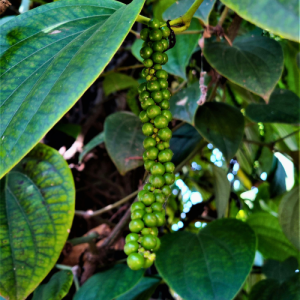
In Kerala’s Thekkady region, spice plantations stretch across lush hills, each plant telling its own aromatic story. Pepper vines climb tall shade trees; cardamom grows in cool, shadowed patches; cinnamon curls into fragrant rolls as it dries. Walking through the fields feels like stepping into nature’s pantry. Guides crush leaves in their palms, releasing scents that are sharper, sweeter, or earthier than anything found in a jar. This is where the world’s spice trade began — and you can smell why.
Kannauj: Perfume the Ancient Way 
Known as India’s perfume capital, Kannauj is one of the few places in the world where traditional attar distillation continues exactly as it did a thousand years ago. Copper stills simmer rose petals, vetiver roots, jasmine blossoms, or even sun-dried clay to produce natural oil perfumes with remarkable depth. The fragrance that fills the workshop is warm and hypnotic — part floral, part earthy, entirely captivating. Each attar is made slowly, drop by drop, resulting in a scent that feels more like memory than perfume.
Coorg: Coffee With a Forest Heartbeat 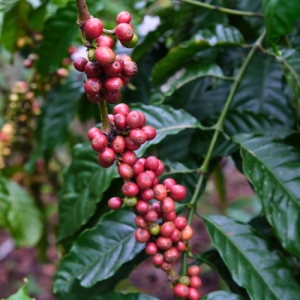
Coorg’s coffee estates sit inside dense, bird-filled rainforest. As you walk through the plantations, you smell different stages of the coffee journey — the fruity sweetness of ripe cherries, the tang of fermentation, and the deep caramel notes released during roasting. Morning fog drifts between the trees, enhancing the earthy aroma of wet soil and leaves. Coffee lovers often say this is where they finally understood what “aroma profile” means.
TASTE — A Country That Cooks Its Identity
Lucknow: The Artistry of Awadhi Cuisine 
In Lucknow, food isn’t rushed — it’s refined. As the capital of the former Awadhi kingdom, the city inherited a royal culinary tradition where dishes were slow-cooked for depth, aroma, and texture. Here, galouti kebabs are ground so finely they melt at the slightest touch, a technique created centuries ago for a toothless Nawab who couldn’t give up his favourite flavours. The rich nihari stew simmers through the night until the meat yields effortlessly, and biryanis are layered with saffron, stock, and delicate spices to create a fragrance that lingers long before the first bite. Tasting Lucknow is like tasting patience — every dish feels deliberately crafted, perfected across generations.
Goa: Where the Ocean Meets Portugal 
Goa’s cuisine is shaped by the sea and by centuries of Portuguese influence, creating a flavour profile found nowhere else in India. Fresh fish is marinated in local chillies, coconut vinegar, and spices that have been used in Goan kitchens for generations. Curries are creamy yet bright, with coconut milk softening their heat, while dishes like prawn balchãodeliver a tangy punch that reflects Goa’s trading history. Dining here often means eating outdoors, with the sound of waves nearby and plates centred around what came off the boats that morning. It’s simple, honest, and deeply satisfying — coastal luxury at its most authentic.
Kolkata Chinatown: The Birthplace of Indo-Chinese Cuisine 
Kolkata is home to India’s oldest Chinese community, and their culinary imprint is unmistakable. In Tangra, the city’s Chinatown, woks blaze over high flames, creating smoky, savoury dishes that blend Chinese technique with Indian spice. The result is a cuisine entirely its own — crisp noodles tossed with fresh vegetables, lightly spiced gravies, perfectly steamed momos, and quick-fired stir-fries layered with garlic, soy, and chilli. It’s bold, comforting, and endlessly popular. Eating here feels like stepping into a cultural conversation that has been simmering for over a century.
Jaipur: A Royal Feast on a Plate 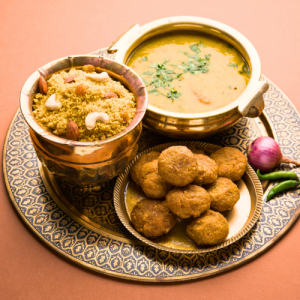
Rajasthan’s royal heritage lives on in Jaipur’s kitchens, where food is hearty, vibrant, and designed to sustain life in the desert. Flavours are unapologetically bold: slow-cooked meats enriched with red chillies, vegetarian dishes built on lentils, ghee, and desert berries, and crisp breads baked to withstand the dry climate. A traditional Rajasthani thali — with its small bowls of curries, pickles, sweets, and breads — feels less like a meal and more like a celebration. Each flavour tells a story of resilience, hospitality, and the region’s deep cultural pride.
Chettinad: Spice Architecture 
Chettinad cuisine comes from the Chettiar community of Tamil Nadu, a wealthy merchant clan known for their stately mansions and sophisticated food traditions. The cuisine is famous for its intricate spice blends built around black pepper, fennel, star anise, and kalpasi — a rare aromatic lichen that adds an unmistakable depth. Dishes here aren’t fiery for the sake of heat; they’re layered, intentional, and deeply aromatic. Meats are slow-roasted, gravies are rich and complex, and even simple rice dishes carry a fragrance that hints at trade routes and global influences. Chettinad is flavour craftsmanship — bold, elegant, and unforgettable.
TOUCH — Craft That Lives in the Hand
Kanchipuram: Silk That Carries Stories 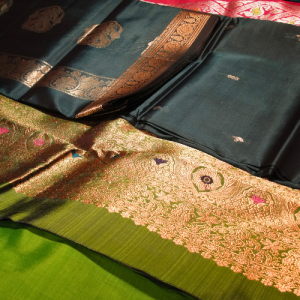
Kanchipuram is one of India’s most revered silk-weaving centres, where craftsmanship has been perfected over centuries. Inside traditional family workshops, weavers guide shimmering silk threads across wooden looms, creating sarees known for their weight, lustre, and durability. Many motifs echo the pillars, domes, and carvings of the temples that dominate the town — a subtle dialogue between textile and architecture. Running your hand over a finished Kanchipuram saree reveals the richness of pure silk and the raised texture of real gold-thread borders. It isn’t just fabric; it’s a tactile story shaped by heritage and devotion.
Agra: Marble Art That Defines Precision 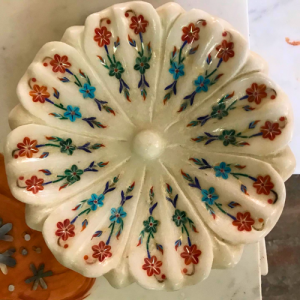
Agra’s artisans practise pietra dura, the same meticulous inlay technique used to decorate the Taj Mahal during the Mughal Empire. In their workshops, you’ll see tiny gemstones — lapis lazuli, carnelian, malachite, mother-of-pearl — being shaped by hand and set into carved marble with a precision that feels almost unreal. Each piece requires hours of quiet concentration. The finished surface is flawlessly smooth, cool to the touch, and impossibly seamless. Holding it, you understand how craftsmanship became an expression of imperial grandeur.
Blue Pottery: Jaipur’s Cool Ceramic Craft 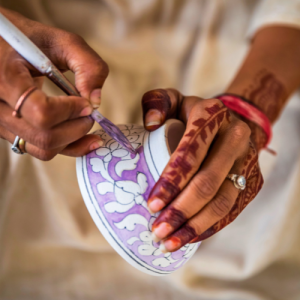
Made from a unique mix of crushed quartz, glass, and natural gum — rather than traditional clay — Jaipur’s blue pottery has a texture that surprises most visitors. It feels cool, silky, and far lighter in the hand than its glazed surface suggests. Artisans mould the dough-like mixture into bowls, vases, tiles, and decorative pieces before coating them in a creamy white glaze.
The signature cobalt blue motifs — floral vines, Mughal-inspired arabesques, tiny birds, and geometric borders — are painted with mineral pigments that hold their colour for decades. Each stroke is done freehand, requiring remarkable steadiness and instinct. Once fired, the pieces emerge glossy and luminous, as if lit from within.
Watching the process in a workshop is its own sensory pleasure: the soft grinding of quartz, the rhythmic shaping of forms, the quiet concentration as painters lean over their work. Every finished object feels both delicate and enduring — a piece of Jaipur’s artistic heritage you can hold in your hands.
SOUL — The Sense That Changes You
Kerala Ayurveda: Wellness Rooted in Science and Tradition 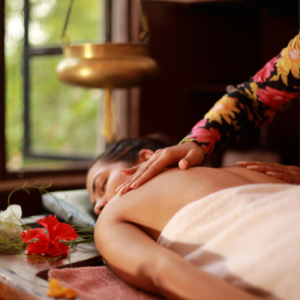
Kerala is considered the heartland of Ayurveda, India’s traditional medical system that has been practiced for over 5,000 years. Here, wellness is not a menu of treatments — it is a philosophy of balance. Therapists warm herbal oils and apply them in long, rhythmic strokes designed to calm the nervous system and restore harmony between body and mind. Many retreats sit within coconut groves or beside backwaters, where the natural landscape deepens the sense of rest. An Ayurvedic experience in Kerala feels less like a spa visit and more like stepping into a lineage of healing.
Meditation in the Himalayas: Silence With Gravity 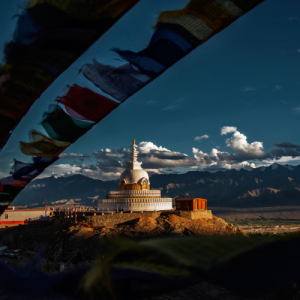
The Himalayas have long drawn seekers, saints, and travellers who come in search of clarity. Sitting in meditation here feels different — the air is sharper, the silence thicker, the mountains somehow grounding your thoughts. Whether you’re at a retreat near Dharamshala, a monastery in Ladakh, or a simple hillside clearing, the stillness has a way of reorganizing your inner world. Even a few minutes of quiet can feel transformative. It’s a reminder that luxury can sometimes mean space — space to breathe, to think, to simply be.
Rishikesh: Spirituality Along the River 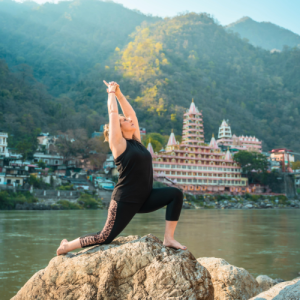
Rishikesh is often called the Yoga Capital of the World, but its energy extends far beyond the mat. Set along the upper Ganga River and framed by Himalayan foothills, the town blends spirituality with natural beauty in a way that feels remarkably accessible. One of its most memorable experiences is the nightly Ganga Aarti, a prayer ceremony where priests offer light, flowers, and incense to the river. The air fills with chants, bells, and the soft glow of lamps. It’s a ritual meant for everyone — a shared moment of connection rather than a performance.
Sight, sound, scent, taste, touch, and soul — each sense opens a new layer of India, creating a journey that is intimate, luxurious, meaningful, and utterly unforgettable.
Ready to explore India through your senses? Contact us to plan your journey now!