Bhutan is often described as one of the last Himalayan kingdoms where tradition, spirituality, and nature continue to shape everyday life. From peaceful monasteries and mountain valleys to vibrant festivals, birdwatching experiences, and slow travel journeys, Bhutan offers families an opportunity to experience travel differently — with more presence, connection, and simplicity.
Hi, I’m Jitendra, and before visiting Bhutan, I had always imagined it as a destination known mainly for monasteries and Himalayan landscapes. But a family trip to Bhutan with my wife and children during late autumn turned out to be far more personal and meaningful than I expected.
What stood out most was how naturally family life blends into everyday Bhutanese culture. Whether we were walking through monasteries, attending colourful Tshechu celebrations, watching rare birds in the valleys, or sharing meals with local families, Bhutan constantly encouraged us to slow down and experience each moment together.
Why Bhutan is Perfect for Family Slow Travel 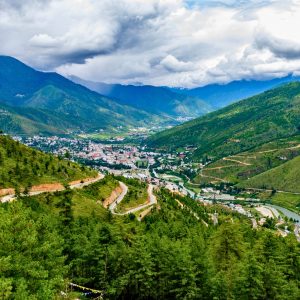
One of the things I appreciated most about Bhutan was its slower rhythm. Unlike destinations built around packed itineraries and rushed sightseeing, Bhutan invites families to pause, observe, and connect more deeply with the places they visit.
The country’s “High Value, Low Volume” tourism model has helped preserve its cultural identity, landscapes, and traditions. Roads wind slowly through mountain passes, villages remain deeply rooted in tradition, and monasteries continue to shape daily life across the country.
For us as a family, this made the journey feel far more meaningful. My children spent time watching monks spin prayer wheels, crossing suspension bridges above rivers, spotting birds in the valleys, exploring forest trails, and learning about Buddhist traditions in ways that felt natural rather than staged for tourism.
Even the drives became memorable parts of the experience. Valleys opened gradually around each turn, rivers cut through the mountains below us, and prayer flags lined the roads connecting small villages across the Himalayas.
Experiencing the Thimphu Tshechu Festival 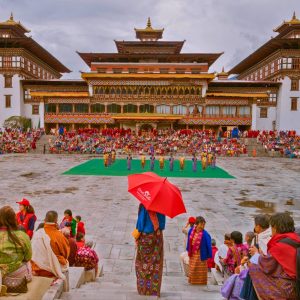
One of the highlights of our journey through Bhutan was attending the Thimphu Tshechu, one of the country’s most important Buddhist festivals.
Held inside the grand courtyard of Tashichho Dzong, the festival brought together local families, monks, and travellers from across Bhutan. From early morning onwards, people arrived dressed in traditional Bhutanese clothing, carrying prayer beads and gathering quietly to watch the sacred masked dances unfold.
For my children, the experience felt completely unlike anything they had seen before. The vibrant masks, flowing robes, rhythmic drums, and ceremonial horns immediately captured their attention. At the same time, there was a strong sense of spirituality and reverence throughout the festival that made the atmosphere feel deeply authentic rather than performative.
The cham dances performed by monks are believed to bring blessings, protection, and spiritual purification. Watching these centuries-old traditions continue so naturally in modern Bhutan became one of the most memorable cultural experiences of our trip.
Hike to Tiger’s Nest Monastery 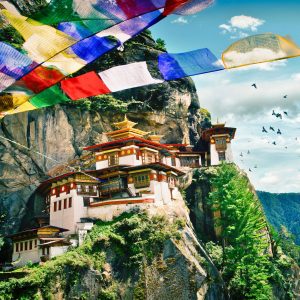
No journey through Bhutan feels complete without visiting Tiger’s Nest Monastery (Paro Taktsang). Perched dramatically on a cliff nearly 900 metres above the Paro Valley, the monastery is one of Bhutan’s most iconic spiritual landmarks.
We started the hike early in the morning through pine forests scented with wet earth and incense. Along the trail, my children noticed colourful prayer flags tied between trees while local pilgrims quietly climbed beside us, turning prayer beads and chanting softly.
The hike required patience, especially with children, but Bhutan somehow encourages you not to rush. Every stop along the trail became part of the experience — watching clouds move across the valley, listening to the forest, and simply slowing down together as a family.
Inside the monastery, butter lamps illuminated ancient temple rooms filled with murals, gold statues, and wooden beams darkened by centuries of incense smoke. Despite the number of visitors, the atmosphere felt deeply peaceful and grounding.
For my children, the experience felt almost magical. They were fascinated by the cliffside monastery, the sound of monks chanting inside hidden temple rooms, and the sense of calm that surrounded the entire mountain.
Spiritual Life in Thimphu 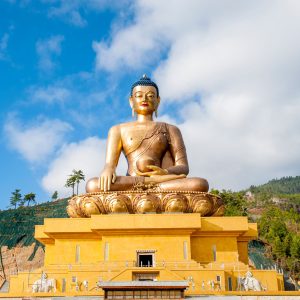
In Thimphu, spirituality felt closely woven into everyday life. One of the most memorable moments for our family was visiting Buddha Dordenma, one of the largest Buddha statues in the world.
Standing beneath the enormous golden Buddha overlooking the Himalayan valley, my children became surprisingly quiet, simply observing local families, monks, and travellers gathered around the site. It was one of those rare travel moments where the atmosphere itself leaves an impression stronger than words.
We also spent time walking through Thimphu’s quieter streets, visiting small cafés, local handicraft stores, and markets where Bhutanese traditions continue to shape modern life. Unlike many busy capital cities, Thimphu felt calm, safe, and deeply connected to its cultural roots.
Discovering Bhutanese Textile Traditions 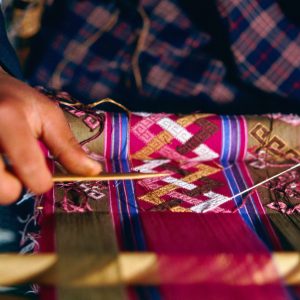
One of the most fascinating cultural experiences for our family was visiting the National Textile Museum.
Bhutanese textiles remain an important part of the country’s identity and daily life. We watched artisans weaving intricate patterns entirely by hand using traditional backstrap and wooden frame looms.
My children were especially fascinated by the bright colours and detailed patterns woven into the fabrics. The artisans explained how many designs symbolise mountains, protection, prosperity, and Buddhist philosophy.
Some ceremonial garments take months to complete, requiring extraordinary patience and precision. What impressed me most was how these traditions continue to be preserved and passed through generations in modern Bhutan.
For families travelling with children, experiences like this make Bhutan feel educational in the most natural way possible — through observation, storytelling, and human connection rather than structured activities.
Family Adventures in Punakha 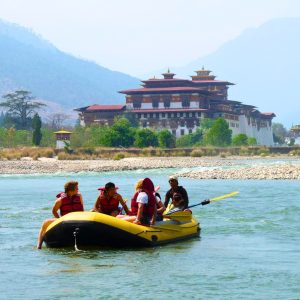
Punakha offered a softer and more relaxed side of Bhutan. Surrounded by rice fields and river valleys, the region felt ideal for family travel.
Along the Mo Chhu River, we experienced gentle river rafting through calm Himalayan waters framed by jacaranda trees and suspension bridges. It felt adventurous without being overwhelming for the children, which made the experience enjoyable for all of us.
Later, we spent time visiting local farms where my children could walk through rice paddies, meet farmers, and see how closely everyday life in Bhutan remains connected to nature and agriculture.
Crossing Punakha’s long suspension bridges became another highlight for the children. Decorated with colourful prayer flags and stretching high above the river, the bridges added a sense of adventure to even the simplest moments of the journey.
One evening, we experienced a traditional Bhutanese hot stone bath beside the river. Heated river stones were placed into wooden tubs filled with mineral-rich water and Himalayan herbs — a wellness ritual still widely practiced across Bhutan. After several days of travel, it became one of the most relaxing experiences of the trip.
Birdwatching & Nature Experiences in Gangtey Valley 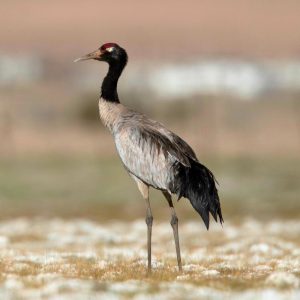
The peaceful valley of Gangtey Valley offered a completely different atmosphere from the rest of our journey.
Late autumn is one of the best seasons for birdwatching in Bhutan, and Gangtey is especially known for the arrival of the rare black-necked cranes that migrate from the Tibetan Plateau each year.
Early one morning, we joined a local guide to quietly observe the cranes across the valley wetlands. Watching these elegant birds glide across the misty landscape became one of the most memorable experiences of our trip — not just for me, but also for my children, who were completely fascinated by them.
Beyond the cranes, we also spotted several Himalayan bird species during nature walks through forests and open meadows surrounding the valley.
What made Gangtey unforgettable was not a single attraction, but the feeling of stillness and connection to nature that existed everywhere around us.
Bhutanese Food & Family Hospitality 
Bhutanese cuisine reflects the country’s geography, climate, and Buddhist culture. Meals throughout the journey felt simple, nourishing, and deeply connected to local traditions.
The most memorable dish for me was Ema Datshi, Bhutan’s famous chilli and cheese dish served with red rice from Punakha Valley. While the spice levels were intense for the children, many local cafés happily prepared milder versions for them.
We also enjoyed buckwheat noodles, momos, butter tea, seasonal vegetables, and home-cooked meals prepared in small family-run homestays.
What stood out most was the warmth surrounding every meal. In Bhutan, hospitality feels genuine and deeply personal. We were often welcomed not as tourists, but simply as guests.
Even small interactions stayed with us — local families smiling at the children, monks greeting us warmly during monastery visits, and café owners sharing stories about Bhutanese traditions over tea.
Why Bhutan Left a Lasting Impression on Our Family
What stayed with me most about Bhutan was not just the landscapes, but the feeling of stillness the country creates.
Prayer wheels continue to spin beside mountain roads, monasteries remain deeply connected to local communities, and traditions still shape everyday life across the country.
For my children, Bhutan became a place of constant discovery — colourful prayer flags, sacred festivals, hidden monasteries, suspension bridges, rare birds, mountain forests, and stories rooted in Buddhist culture and Himalayan folklore.
For me and my wife, Bhutan offered something increasingly rare in modern travel: the chance to slow down together as a family and experience a destination with genuine presence rather than urgency.
Bhutan does not overwhelm travellers with excess or endless attractions. Instead, it offers something far more meaningful — authenticity, mindfulness, and connection.
For families seeking cultural immersion, spiritual journeys, Himalayan adventure, birdwatching experiences, and meaningful slow travel, Bhutan remains one of the most extraordinary destinations we have ever experienced.